
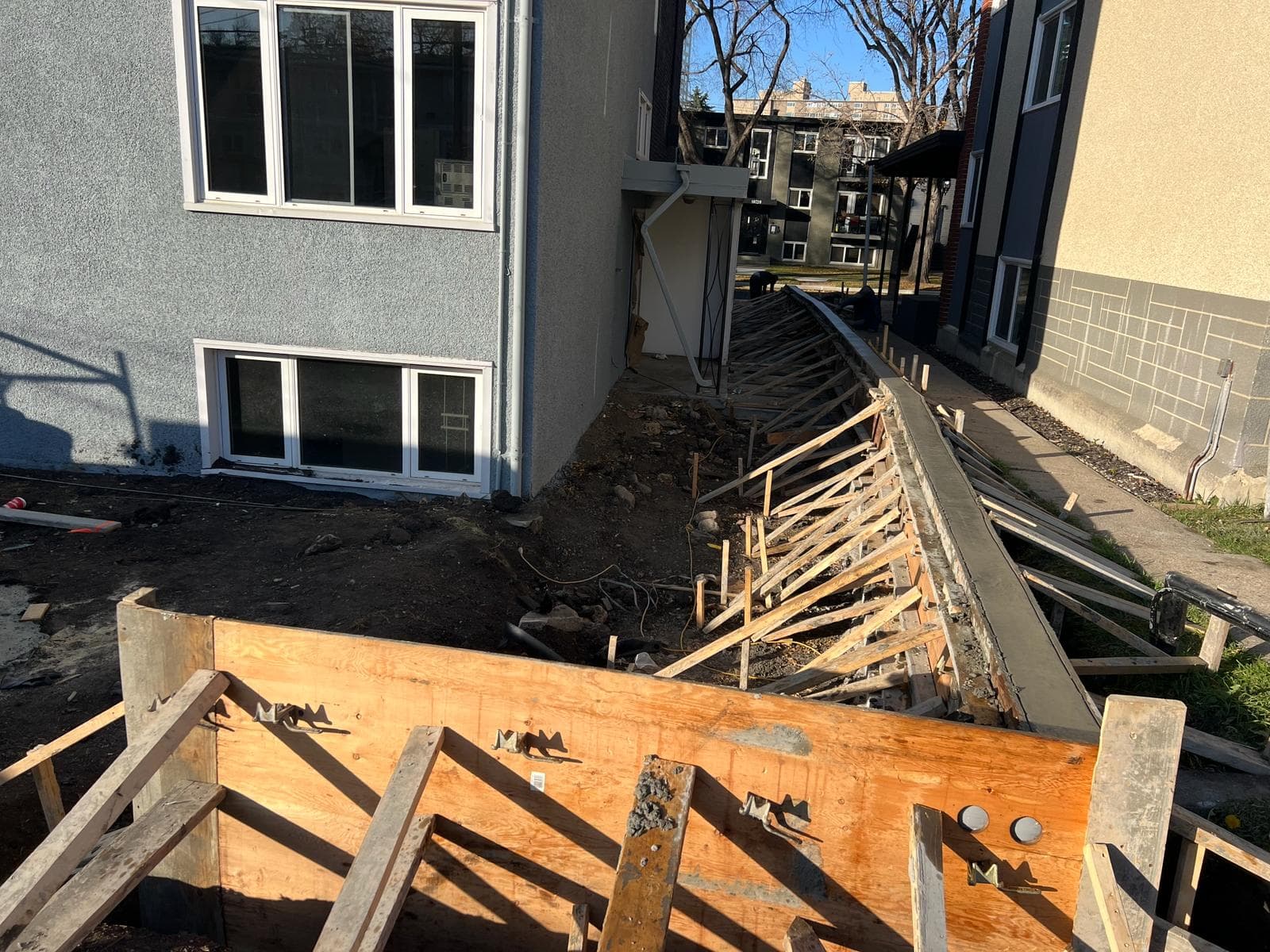
Retaining Walls in Texas
Structural retaining walls for slope management and property boundaries
Our commercial retaining wall portfolio covers cast-in-place concrete cantilever walls for sites where right-of-way or property line constraints limit footprint, mechanically stabilized earth (MSE) wall systems for large fill embankments at highway-grade commercial pads, segmental retaining wall systems for landscaped commercial entries and parking lot grade separations, and soldier pile and lagging for tight urban excavations where adjacent structures prohibit open cuts. Each system is engineered to site-specific soil parameters, surcharge loads from parked vehicles or adjacent structures, and drainage conditions that are often more demanding in Texas than the wall vendor's standard detail assumes.
Drainage is the leading cause of retaining wall failure in Texas, and we engineer it aggressively. Behind every wall we install a granular drainage envelope, perforated pipe at the footing, and weep holes or outlets spaced to drain the saturation that follows Houston's 10-inch rain events or the sudden Hill Country thunderstorm that saturates an otherwise dry limestone hillside. We size drainage systems from the civil engineer's tributary drainage area calculation, not by habit, and we daylight outlets so that property owners can visually confirm drainage function years after construction.
Commercial retaining wall projects in Texas require building permits when walls exceed four feet in height (measured from the bottom of the footing), and some jurisdictions require engineering even for shorter walls when they support surcharge loads from parking, driveways, or adjacent structures. We pull permits, coordinate the structural engineer's stamped drawings, and schedule the inspections — including footing inspection before concrete placement and final inspection before backfill covers the drainage system.
We have built retaining walls as part of industrial site development in the Houston Ship Channel corridor, as gravity walls supporting TxDOT right-of-way fills at commercial access roads, and as decorative cast-in-place walls framing the entries of DFW mixed-use developments. Whether the wall holds back two feet of grade change or twelve, the engineering and drainage behind it receive the same level of attention.
What's Included
- •Geotechnical review and lateral earth pressure analysis
- •Structural engineering coordination for walls over four feet
- •Excavation and footing preparation
- •Cast-in-place concrete cantilever wall or MSE system installation
- •Segmental retaining wall installation for landscaped commercial sites
- •Granular drainage aggregate, perforated pipe, and filter fabric installation
- •Weep hole placement and drainage outlet grading
- •Compaction testing on retained fill
- •Building department permit submission and inspection coordination
Frequently Asked Questions
What type of retaining wall works best on Houston-area clay soils?
Houston's high-plasticity clay creates two distinct problems for retaining walls: high lateral earth pressure from the weight and cohesion of the clay itself, and dramatic swelling pressure when the clay saturates after rain. For commercial walls taller than four feet in this region, we most often specify a cast-in-place concrete cantilever wall with a footing extended into the passive resistance zone, designed with drainage aggregate and perforated pipe to intercept water before it builds hydrostatic pressure. Segmental block systems can work on smaller residential-scale grade changes, but for commercial loads — parking lot surcharge, truck aprons, delivery dock grade separations — cast-in-place concrete with engineered drainage is the more reliable long-term solution. We also evaluate MSE wall systems for larger embankments where geogrid-reinforced fill is practical.
Do retaining walls require permits and engineering in Texas?
In most Texas jurisdictions, retaining walls over four feet in height measured from the bottom of the footing require a building permit and engineering drawings stamped by a licensed Texas structural or civil engineer. Some municipalities — including the City of Houston and several DFW suburbs — have lowered that trigger to walls over three feet or any wall supporting a surcharge load from a driveway, parking lot, or structure. We handle permit submittals, provide or coordinate engineering, and schedule inspections at the footing stage and at completion before backfill conceals the drainage system. Skipping permits on retaining walls is a liability issue for property owners — an unpermitted wall that fails can expose the owner to negligence claims, and title insurers increasingly require disclosure of unpermitted structures.
How long does retaining wall construction take on a commercial site in Texas?
A cast-in-place concrete cantilever wall in the 4-to-8-foot height range, 100 to 200 linear feet, typically requires three to five weeks from permit issuance: excavation and footing preparation in the first week, footing pour and cure through the second week, wall forming and rebar in the third week, wall pour and initial cure in week four, and drainage installation plus backfill compaction in week five. Larger walls — highway-grade MSE embankments supporting a commercial pad — can run two to four months. Segmental block walls on smaller projects install faster, sometimes completing in one to two weeks, but still require drainage installation and proper compaction of the retained fill. We always schedule a geotechnical compaction inspection on the backfill, because poorly compacted retained soil is the second most common cause of wall failure after drainage failure.
What drainage systems do commercial retaining walls need in Texas?
Texas wall drainage has to handle high-intensity short-duration rainfall events — Houston regularly records three to five inches in a single storm — so undersized drainage behind a retaining wall creates hydrostatic pressure that can overturn or crack the wall within its first decade. Our standard commercial detail includes: 12 to 18 inches of #57 crushed granite or limestone drainage aggregate directly behind the wall stem, 4-inch perforated pipe at the footing level draining to daylight or a catch basin, weep holes through the wall face at 8-foot centers as a secondary relief valve, and filter fabric between the drainage aggregate and the retained soil to prevent fines migration that would block drainage over time. On sites with high water tables — common in Harris County and along the coast — we may add sump pumps or dewatering systems depending on the civil drainage design.
Can retaining walls be built adjacent to TxDOT right-of-way in Texas?
Yes, but work within or adjacent to TxDOT right-of-way requires a TxDOT driveway or utility permit from the relevant TxDOT district office, and the wall design must meet TxDOT standard specifications if the wall is within the clear zone or otherwise affects highway operations. We have navigated TxDOT permit processes across multiple districts — Houston, Dallas, San Antonio, Corpus Christi — and understand the submittals required: traffic control plans, engineer-sealed wall drawings, surety bonds for work in the right-of-way, and coordination with the TxDOT inspector of record. Projects near TxDOT ROW should anticipate four to eight weeks of permit processing before work begins.
What maintenance do commercial retaining walls require in Texas?
Commercial retaining walls in Texas need an annual visual inspection after the first heavy rain season, with particular attention to: weep hole outflow (weep holes that run clear during rain indicate drainage is functioning; weep holes that remain dry in saturated conditions indicate potential blockage); wall face cracking, especially stair-step cracks in masonry or horizontal cracks in concrete that suggest bending distress; settlement or rotation of the wall cap or top course; and vegetation infiltrating drainage aggregate or joints. We recommend a professional inspection every three to five years on walls over six feet tall or any wall supporting a vehicle surcharge. Early identification of drainage blockage or soil settlement is far less expensive than emergency wall repair after a failure event.
Common Situations
- •A commercial developer in Harris County needs a 200-linear-foot cast-in-place retaining wall to create a level truck court at a distribution center where the site drops six feet across the pad
- •A retail center owner in the Hill Country needs an MSE wall system to support a commercial pad elevated above a limestone drainage channel, with drainage designed for intense storm runoff
- •A mixed-use developer in DFW needs a decorative cast-in-place concrete wall to manage the grade transition between a parking structure and a landscaped plaza, engineered for vehicle surcharge from the adjacent drive aisle
Example Engagement
Service Type
Retaining Walls
Scope
A commercial developer needs a 150-linear-foot cast-in-place concrete cantilever retaining wall to create a level loading dock area on a site with an eight-foot grade change across the building pad. The wall must support a 2,000-pound-per-linear-foot vehicle surcharge from the dock apron and manage drainage from a 50,000-square-foot contributing drainage area.
Client Situation
The site is in Southwest Houston on high-plasticity clay soils. The structural engineer has specified an 8-foot cantilever wall with a 5-foot footing, designed for full hydrostatic pressure unless adequate drainage is demonstrated.
Our Approach
We install the footing and wall per the engineer's design, place 18 inches of drainage aggregate behind the stem, install 4-inch perforated pipe to a catch basin, and confirm drainage function before completing backfill. We schedule footing and final inspections with the City of Houston building department and document drainage installation with photos for the project file.
Expected Outcome
A permitted, inspected, engineer-designed retaining wall that holds the dock elevation, drains properly after heavy rain, and supports the dock vehicle surcharge without movement or cracking over the design life.
Why Choose Us
Free Estimates
Get a detailed project estimate tailored to your specific needs and site conditions.
Expert Consultation
Our experienced team provides guidance on project requirements, permits, and best practices.
Quality Assurance
We ensure all work meets or exceeds local building codes and industry standards.